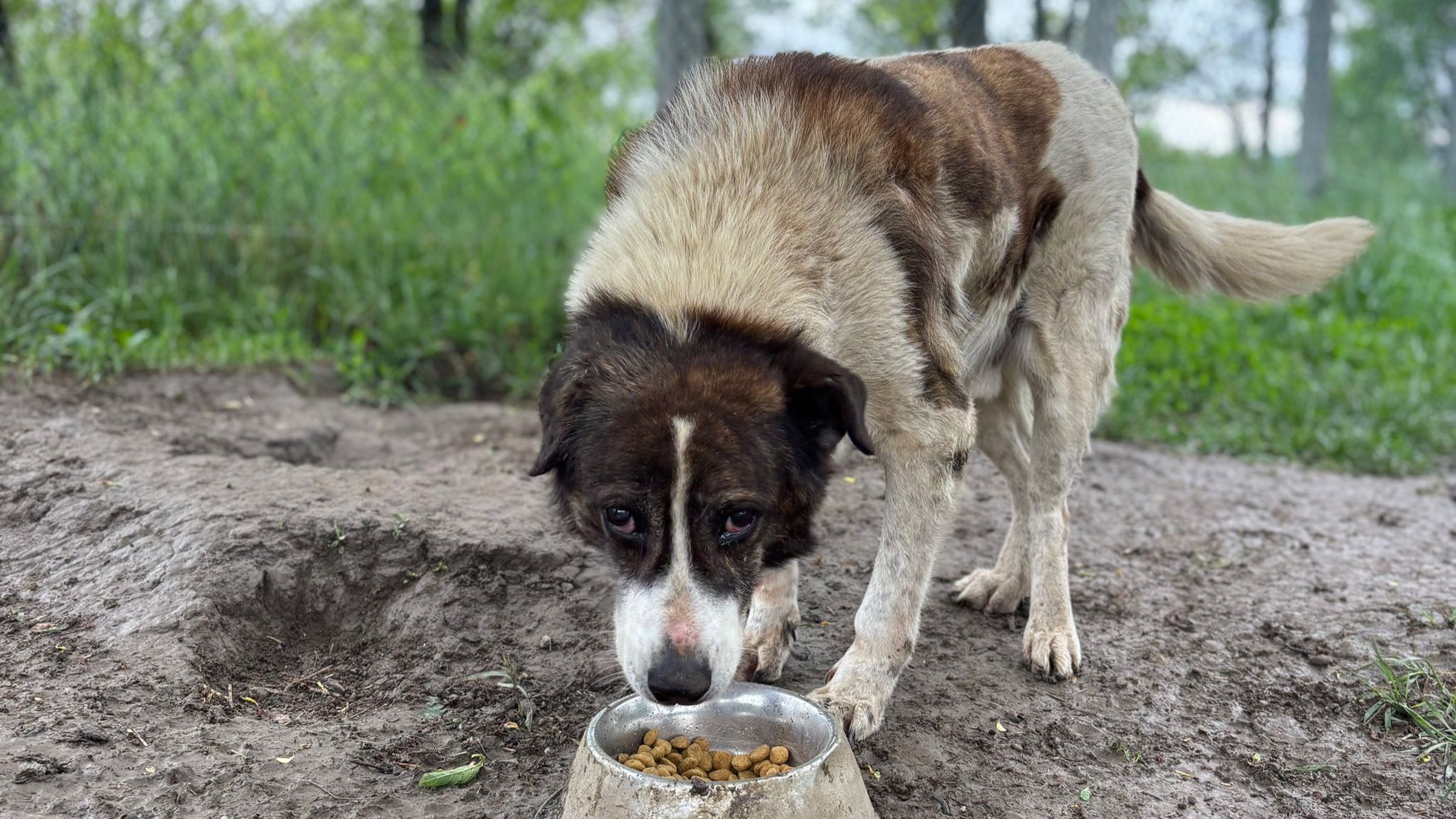
When Baba arrived at Dumbrava three years ago, the decision was easy. She had been found in a dumpster in Cluj, around twelve years old, with both eyes outside their sockets and another serious head injury. She needed surgery, and without it, there wasn't really a future to discuss.
So we fought ...both eyes were removed, she spent about two weeks in the clinic, and then she came home. She adapted far more quickly than we expected, within days she had memorized the house, learned where the beds, bowls and doors were, and figured out how to move around with surprising confidence.
Three years later, the questions are very different, Baba is now around fifteen years old. The blindness that she adapted to so well also makes growing old much more complicated. Every examination, every new medication, every veterinary visit depends almost entirely on trust. She cannot see what is happening or understand why someone is holding her still.
Recently, her health has started to decline. Coxarthrosis and old fractures that healed long before she came to us have become increasingly painful.
The obvious answer would be more investigations, more medication, more treatment... except it isn't obvious anymore.
Baba no longer tolerates being handled. Trying to examine her or give her medication often results in loud cries that sound as though we are hurting her far more than we actually are. Whether it is fear, pain, confusion, or a combination of all three is difficult to know.
And that leaves us with a question that has no simple answer:
How long should we keep going?
At what point does another test stop being help and become stress?
How much fear is acceptable if the goal is to reduce pain?
How many veterinary visits are worth it for a dog who cannot understand why she keeps being taken away from the only place where she feels safe?
Animal rescue is often imagined as saving lives, people celebrate the surgery, the recovery, the before-and-after photographs. Much less often do we talk about the decisions that come years later, when an animal has already been saved, when the goal is no longer to save a life at any cost, but to protect the quality of the life that remains.
There are no guidelines that tell you where that line is, every animal is different, every disease is different, every day can change the answer.So, for now, we do what we have always tried to do, we watch Baba carefully, we try to relieve her pain without causing more fear than necessary.
We ask ourselves difficult questions instead of choosing the answer that simply makes us feel like we have "done everything., because sometimes "everything" is not the kindest option, sometimes the greatest act of care is knowing when comfort matters more than another procedure.
We don't know what the coming days will bring for Baba, but after surviving a dumpster, adapting to life without sight, and spending the last three years surrounded by people and animals she trusts, we owe her more than a longer life, we owe her a peaceful one.
Comments
Comments are moderated before they appear on the site.
There are no published comments yet.